
Was this newsletter forwarded to you? Subscribe here to keep up to date on NFCA News!
In this edition:
Please Feel Free to republish these Stories in your Co-op or Organization’s Newsletter or Blog, or Link to them in Social Media, crediting ‘Neighboring Food Co-op Association’ and linking to our website at https://nfca.coop.
Navigating High Food Prices

As grocery bills keep climbing, many shoppers are left asking the same question: Why are food prices so high?
That’s the question a recent episode of The Daily from The New York Times explores. It follows Tyler Kulp, general manager of NCBA member East End Food Co-op in Pittsburgh, as he walks listeners through the economics behind today’s grocery prices.
Rather than pointing to a single culprit, the episode reveals the complex web of production costs, transportation, labor and supply chain pressures that shape the price of food long before it reaches the checkout lane.
For co-operatives, however, the story goes one step further. Food co-ops have long embraced a level of transparency that traditional grocery stores rarely offer. Because they’re owned by the people who shop there, co-ops regularly share how pricing decisions are made, why margins matter and how every dollar supports fair wages, local producers and a resilient food system—not distant shareholders.
In uncertain economic times, that openness helps build something just as valuable as affordable food: Trust. Listen to the episode here.
Thanks to our partners at NCBA CLUSA for permission to republish this story. For more information on how the NFCA is working together to build a more healthy, just, and sustainable food system, please visit our website.
Welcome New General Manager
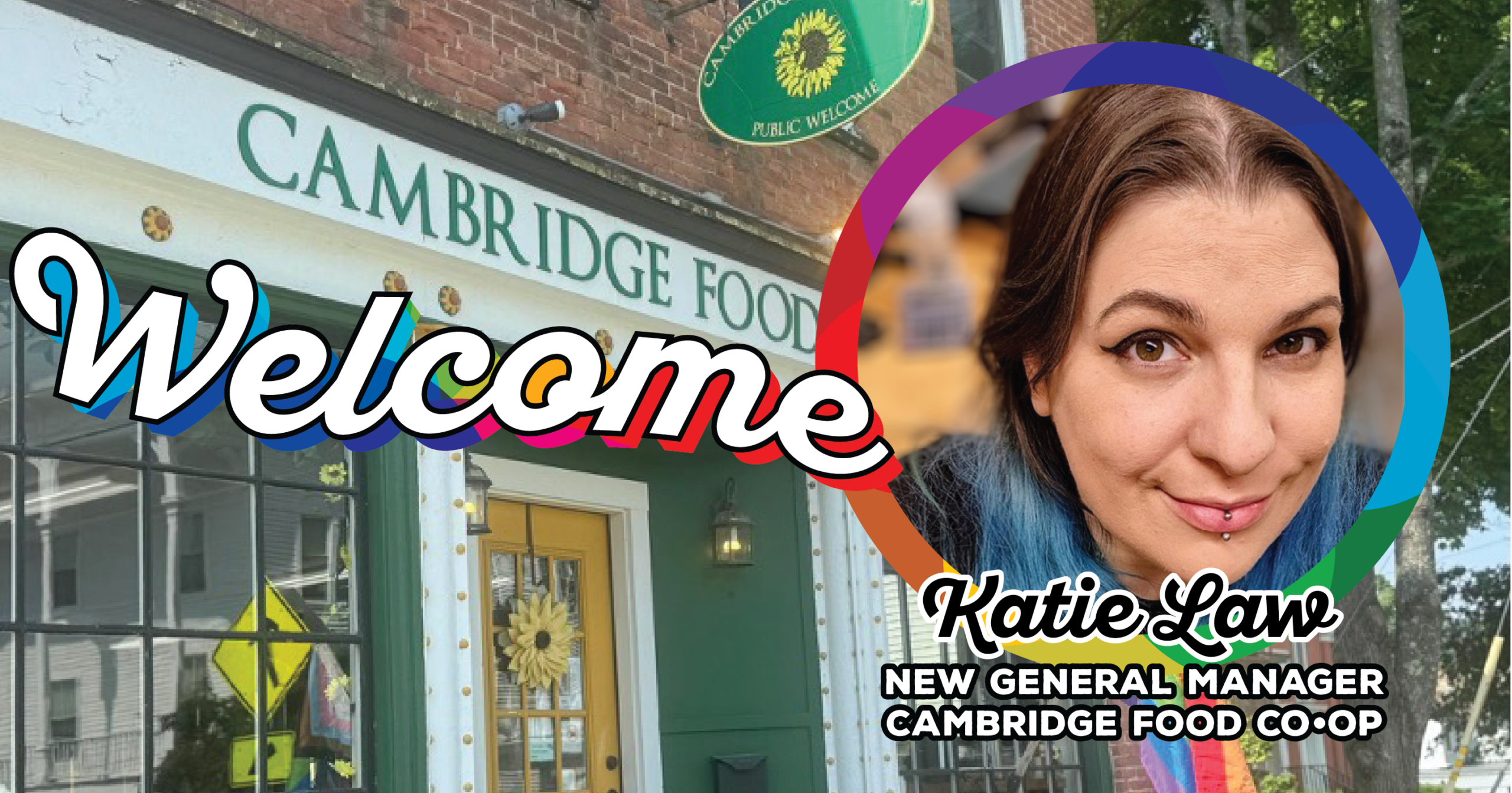
Cambridge Food Co-op in Cambridge, New York, Welcomes Katie Law as the New General Manager.
This spring Katherine (Katie) Law was hired as the General Manager of the Cambridge Food Co-op in New York State. Katie writes “I began my co-op career in 2017 as a janitor at Wild Oats Market in Williamstown, Massachusetts. That entry-level position marked the beginning of a career rooted in good food, co-operative values, and community connection.”
After leaving Wild Oats for a time, she spent several years co-running a farm-to-table food truck and small brick-and-mortar restaurant. She eventually returned to Wild Oats as the Wellness Buyer just as the COVID-19 pandemic began. Despite the challenges of that period, she thrived in the role and later advanced to Grocery Supervisor.
When the General Manager position became available at the Cambridge Food Co-op, Katie took note of the opportunity and applied.
“I saw this fantastic little store and felt it was the perfect place for me to spread my wings, experience the very best of Co-operative Values, engage meaningfully with the community, and build a career filled with joyful days,” says Katie. “I have genuine belief in the role a community-owned grocery store can play in supporting local producers, bringing people together, and helping its community thrive.”
As General Manager, Katie brings her experience in purchasing, grocery operations, food service, and small-business management. The Cambridge Food Co-op is a small co-operative whose mission is to foster a resilient community by providing healthy, sustainable food while featuring local producers within an inviting and supportive space.
Please join us in welcoming Katie and if you are in the area, please stop in and say hello! For more information, please Cambridge Food Co-op’s website.
The Invisible Infrastructure
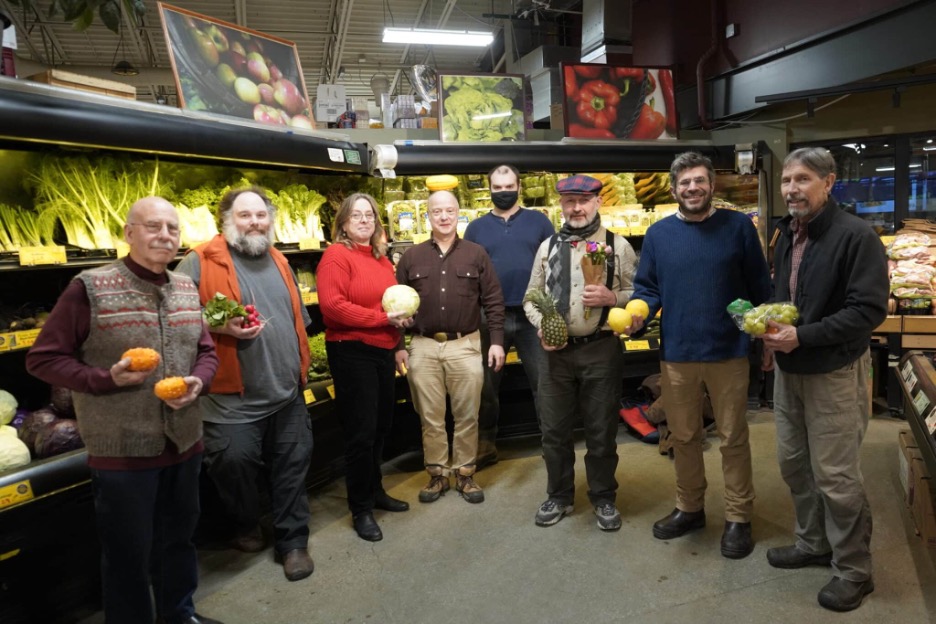
One letter to Congress saved co-operatives billions. Here’s the network that made it possible.
By Carl Etnier, Council President, Hunger Mountain Co-op
In a previous article, I presented the case — reporting on a speech by Doug O’Brien, head of the National Cooperative Business Association (NCBA CLUSA) — that co-ops are crisis infrastructure. Rural electric co-ops reached families that corporations wrote off in the 1930s. Credit unions helped their members weather the economic shock of 2008. Food co-ops kept shelves stocked and their members safe through Covid lockdowns — and, this year, made sure food reached neighbors afraid to leave their homes during the federal Operation Metro Surge in the Twin Cities.
O’Brien’s speech was to accept the Neighboring Co-operator Award at the Neighboring Food Co-op Association (NFCA) 15th Annual Meeting last March; he opened by deflecting the credit: “This award is not really about me, it’s about NCBA, which is to say, our entire co-operative community.” Where my last article was about how various types of co-ops rise to the occasion during crises, this one is about what connects co-ops across sectors — the associations through which food co-ops, farmer co-ops, credit unions, housing co-ops, and worker co-ops act as one.
O’Brien laid out how that works in practice, and why it multiplies their power. Below: three policy fights co-ops fought (and are fighting) together, what association builds between the fights, and what it all means for us at Hunger Mountain Co-op.
Three fights, one pattern
O’Brien gave three examples — different years, different sectors, same move.
- The Tax Fight. Last year, credit unions faced tax status changes that could have forced 70% of them to close. The whole co-operative sector “united under the ‘don’t tax my credit union’ banner,” O’Brien said — and won. Food co-ops and housing co-ops showing up for credit unions, because next time it might be us.
- The Covid Letter. In the early days of the pandemic, Congress drafted business-relief legislation that would have left some types of cooperatives out in the cold. “I reached out to the executives of all the associations representing other kinds of co-ops,” O’Brien said, “and asked if they would join in a letter to Congress that made the very simple point that all cooperatives need to be eligible. We were successful in that. It had an impact on different sectors of billions of dollars, and it ensured that many cooperatives could remain in business.”
- The SBA Fix. This work never really ends. Right now, O’Brien is pushing the Small Business Administration to fix how it treats co-op lending: “SBA requires all the owners to personally guarantee those loans. Well, that’s bananas for a co-op that has hundreds or thousands of members. It doesn’t work, right? So, we have to work with them to change that.”
Notice what these efforts have in common. None of them could have been pulled off by a single co-op, or even a single sector. Each one took scale, speed, and — this is the part that’s easy to miss — trust built long before the crisis showed up. You can’t assemble a coalition while the house is on fire.
What The Network Does Between Fights
Policy battles are the visible part. The quieter value of association is everything that happens between them.
Think of it as a system running from the local to the global: policy roadmaps, hard-won lessons, and crisis playbooks that get shared instead of reinvented, co-op by co-op, from scratch. When a co-op in Vermont figures something out, a co-op in Oregon shouldn’t have to figure it out again.
Building networks is an ongoing process, too. For example, NCBA CLUSA and the Neighboring Food Co-op Association (NFCA) recruited Vermont’s U.S. Rep. Becca Balint to the Congressional Cooperative Business Caucus, and in June she met the folks at the nearly-ready-to-open Caledonia Food Co-op in St. Johnsbury. (The co-op just opened July 8; we congratulate them on the accomplishment!)
But a network is only as good as the people who show up for it. O’Brien made a point of praising leaders who “lean into association and giving time and energy to advance a common cause.” Showing up matters. It’s what keeps a handful of dedicated people from carrying the whole load until they burn out. It’s what turns occasional projects like strategic planning from a chore every co-op tries to do itself into a set of tools created together that all of us can use. And it’s how good ideas travel instead of dying in isolation.
Where We Come In
So, what does this mean for us at Hunger Mountain Co-op? Three things, none of them complicated:
- We stay connected — to the Neighboring Food Co-op Association regionally and NCBA CLUSA nationally.
- We speak up — lending our voice on policies that shape things our community depends on, like SNAP and co-operative development funding.
- We keep teaching — investing in member education about what co-ops can do, because the “best-kept secret” problem doesn’t fix itself.
And there’s one more association you benefit from every time you shop: National Co+op Grocers (NCG), a co-op made up of food co-ops. NCG gives us many of the advantages of a national chain — including billions of dollars in combined purchasing power to negotiate prices on national products — while every member co-op keeps its full autonomy. That special you grabbed last week? There’s a decent chance it came to you through NCG.
None of this is new. When NCBA CLUSA was founded in 1916, the world was in worse shape than it is now: armies of capitalist nations were slaughtering each other in the First World War, and Russia was (unknowingly) on the eve of the Bolshevik revolution. Some people back then proposed skipping both capitalism and communism and running the whole economy on the cooperative model. (Some people haven’t given up on that.) The movement’s answer to a world on fire, then as now, was the same: organize together.
Which was O’Brien’s closing point, and I’ll borrow it as mine: association is essential. When we invest in our network, the network invests in us.
Thanks to Carl Etnier, Council President at Hunger Mountain Co-op, for permission to reprint this article. For more information on the NFCA’s collaboration with groups like CoBank, NCBA CLUSA, and the New England Farmers Union, please visit our webpage on Policy Advocacy.
Voter Registration Day September 15th

On September 15th, community partners across the country will participate in National Voter Registration Day, making registration more visible, accessible, and even a little bit joyful. Will your co-op be joining them?
There is still time for your food co-op to sign up as a Community Partner and receive support materials for a successful Voter Registration Day! The Neighboring Food Co-op Association (NFCA) is proud to partner with National Voter Registration Day this year, encouraging co-ops across the Northeast to participate in this nonpartisan civic holiday dedicated to celebrating our democracy. Taking place on September 15, community events will coincide with the UN International Day of Democracy — an opportunity to consider how we can promote the ideal of democracy as a reality to be enjoyed by everyone, everywhere.
Each year, co-operatives, nonprofits, campuses, libraries, election offices, faith communities, businesses, and other organizations make National Voter Registration Day possible and set it apart as a truly national civic moment. For food co-ops, participation is an opportunity to engage staff and volunteers in community outreach, strengthen relationships with local organizations, and communicate the values that set us apart.
Imagine if you could wave a wand and receive every communications resource you need to put on a successful National Voter Registration Day event. Talking points! Messaging guidance! Social media tips! Sample e-mails! It’s easy to sign up — and when you do, you can receive free stickers and posters, customized resources, and assistance in planning your celebration of our democracy!
Recordings of recent presentations are available on their website, including “Communicating with Care, Clarity, & Compliance to Protect Your Organization and Community,” and “Ready, Set, Register! Planning Your 2026 NVRD Voter Registration Drive.” 2026 State Voter Registration Guides have been updated for every state and consist of a printable 2-3 page guide that covers everything you need to know to confidently plan and carry out voter registration efforts.
Register now for a free webinar coming up on August 5th on “Navigating Changing Laws on Voter Registration Drives!”
For more information on how your food co-op to promote democracy this election season, please visit National Voter Registration Day.
Belfast Community Food Co-op Celebrating 50 Years
What began in 1976 as a small buying club has grown into a community cornerstone in the heart of Belfast, Maine — built by neighbors, nurtured by shared values, and sustained by generations of member-owners.
On August 22, Neighboring Food Co-op Association member Belfast Community Food Co-op will be celebrating 50 years of co-operation, and the whole community is invited! The free gathering will include good food, shared stories, and great music — a chance to reconnect, reminisce, and celebrate everything co-op members have built together over the years.
Food co-ops such as Belfast are anchors of their communities, empowering people to work together to meet their needs and strengthen their communities. For example, on average 30% of sales at our member co-ops are local products, compared to 2-5% in supermarkets. Food co-ops in our region are also more sustainable and resilient, with the average being in business for more than 30 years. In August, Belfast Community Co-op will join 25 food co-operatives in New England and New York State that have served their communities for 50 or more years!
Please join us in congratulating Belfast Community Food Co-op on five extraordinary decades building their community, strengthening the regional food system, and growing the wider co-operative economy. For more information, visit their website.
Cooperative Development Foundation
Founded in 1944, the Cooperative Development Foundation is dedicated to celebrating, strengthening, and advancing our Co-operative Economy.
Originally founded as the “Freedom Fund” to support the reconstruction and development of European co-ops in the post-war era, the Cooperative Development Foundation (CDF) works to build capacity for the cooperative business community through grantmaking and programming.
CDF also brings our community together to celebrate and strengthen our co-operative ecosystem. For example, the annual Co-op 5K is a fun, family-friendly event that not only raises funds for co-op development but also offers an opportunity for co-operators nationwide to join in a little friendly competition. Every year the Neighboring Food Co-op Association (NFCA) organizes a team and invites your co-op to participate as we work to grow the co-operative economy.Another example is the Cooperative Hall of Fame, which honors co-op heroes who have positively impacted and inspired our movement and serves as a major fundraiser for the Foundation. This year’s inductees include Fannie Lou Hamer, founder of Freedom Farm Cooperative (FFC) in 1969, an agricultural, educational, and manufacturing cooperative which fed and employed thousands of families in rural Mississippi. For more information on how you can contribute in honor of this year’s Co-op Heroes during Co-op Month in October, please visit https://heroes.coop.
CDF also brings new and diverse audiences into the cooperative business community and supports emerging and established leaders through programs like the Cooperative Leaders & Scholars fellowship. They mobilize charitable giving in response to natural disasters. CDF also collaborates with co-op support organizations across the country to connect cooperatives with the funding, education, technical assistance, and research they need to thrive. Through the Cooperative Development Fund and the Cooperative Education Fund, CDF invests in cooperatives and the organizations that help them grow and build capacity nationwide. And through partnerships at the local and state levels, CDF learns and shares what it takes to build robust and connected cooperative economies. A longtime partner of the NFCA, CDF has supported our educational initiatives, development efforts, and member gatherings, and hosts our Neighboring Co-operator Award.
We invite co-ops and their members to participate in CDF’s activities and donate to their efforts to celebrate, strengthen, and advance our co-operative economy.
For more information on the Cooperative Development Foundation and how you can contribute, please visit https://cdf.coop.
Co-ops in the News
Plans for a $10M member-owned grocery store and food hub in Lewiston’s downtown take shape
Sun Journal
Demolition begins on back portion of former Wilson’s Department Store in Greenfield
Greenfield Recorder
Has your co-op been in the news recently? Send your item to info@nfca.coop.
August Cave-to-Co-op Special
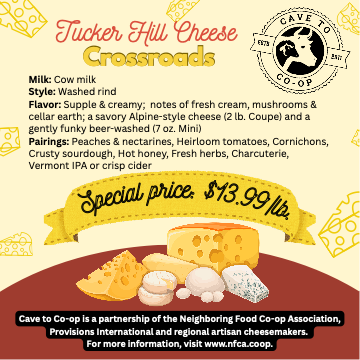
This month’s Cave to Co-op cheese is Willoughby, Jasper Hill Farm, Greensboro, This month’s Cave to Co-op cheese is Crossroads from Tucker Hill Cheese, Randolph Center, VT
Each month, your Neighboring Food Co-ops feature our region’s artisan cheesemakers by offering a specially selected cheese at great price. Look for the “Cave to Co-op” sign in the cheese section at your local food co-op. To find one near you, visit www.nfca.coop/members.
Crafted by Vermont’s newest cheesemaker in Randolph Center, Crossroads is a semi-soft, beer washed-rind cheese inspired by the classic French Reblochon.
Renown cheesemaker, Jeremy Stevenson, formerly with Springbrook Farm, now has his own cheesemaking facility, Tucker Hill Cheese Company. Jeremy, who trained with a French cheesemaking consultant gives a nod to Reblochon, an Alpine style cheese. Its thin velvety, yellow/orange rind and smooth supple pate will keep you in Vermont at the crossroads while dreaming of France!
Recipe ideas include grilled peaches with melted Crossroads & hot honey or heirloom tomato tartines with Crossroads and basil. Try topping melted Crossroads on a grilled zucchini or a burger with grainy mustard. Create your own cheese board with fresh berries, cornichons and crusty bread.
Need some tips on “how to” create your own cheese or charcuterie? Check out Co+op’s “Creating the Perfect Cheese Plate” or “How to Create the Best Alpine Cheeseboard” from The Cheese Professor. Your food co-op is sure to have the ingredients to create a wonderful pleasing presentation for your gathering.
Working together, the NFCA is leveraging the purchasing power or our food co-ops to support local producers. Each month, we work in collaboration with Provisions International to feature a specially selected local cheese at great price. Look for the “Cave to Co-op” sign in the cheese section at your participating food co-op.
Take Action for Transparency in the Food System

TAKE ACTION TODAY! The Senate Agriculture Committee is scheduled to mark up the farm bill this Thursday, August 6, and we have a real opportunity to make markets fairer, more competitive, and transparent – for farmers and consumers.
Do you want to know where your food comes from? Do you want to be able to choose American beef at your food co-op? Consumers deserve honest and transparent food labels so they can choose U.S. beef for their families. Likewise, our cattle producers deserve a fair chance to provide consumers with top-quality beef.
We need your help NOW! Tell your senators you support mandatory country-of-origin labeling (COOL)!
Did you know that just four multinational meatpackers control 85 percent of beef packing in the United States, affording them immense power over our food supply? Without mandatory COOL, meatpackers can import foreign beef, repackage it, and sell it as if it was grown by American ranchers. This is unfair for both consumers and family farmers that work hard to raise high-quality beef. It’s time to restore truth and fairness in our food system.
The Senate has introduced legislation that would do just that: the American Beef Labeling Act (S.421), led by Senator Cory Booker (D-NJ) and Senate Majority Leader John Thune (R-SD).

Send Your Message: Urge your senators to support adding S.421 to the Senate farm bill to reinstate mandatory COOL for beef.
Join the Farmers Union! For as little as $15, you can become a “Friend of the Farmer,” helping to strengthen the voice of our region’s farmers and consumers, advocating for better food system policy, and supporting co-operative business.
For more than a decade, the Neighboring Food Co-op Association (NFCA) has partnered with the New England Farmers Union to build a more healthy, just, and sustainable food system for everyone. There is strength in numbers, and more than ever we need you. For more information on the benefits of membership, please visit the New England Farmers Union website.
Upcoming Events
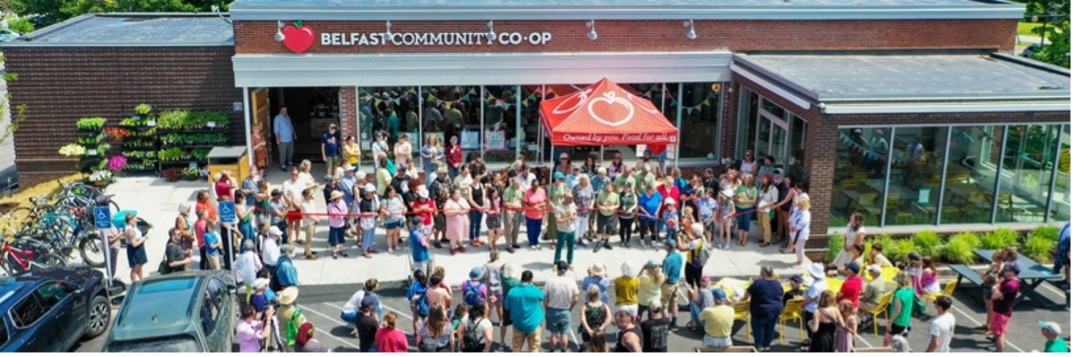
Belfast Community Co-op 50th Anniversary Celebration
Coming up Saturday, August 22, 2026, Belfast, Maine!